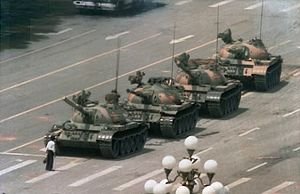
I once heard John Shelby Spong tell a crowd of admirers that the Book of Revelation should have never been included in the canon. My disagreement with the Bishop is not that he takes issue with the canon. Far from it, as I have a particular beef with Hebrews, the two Tims and Titus. The issue I take with Spong’s proposal is one of the integrity of the early Christ-centered witness. That witness being, that, Jesus of Nazareth is the rightful ruler of the world, and not Caesar, and that the cross is the standard of power, and not the legions of Rome.
I readily admit that the Apocalypse to John has been abused and misinterpreted by much, if not most, of Christendom over the past 1500 years. That is a problem of the mainstream church, and not the text. It is a very deeply embedded problem of the fundamentalist wing of Christendom, but not just on the conservative side of the spectrum. Apocalypse bashers from the left wing of all sorts of semi-faithful interpreters have a tendency to literalize the last book of the Greek testament as well. My suggestion to both ends of the doctrinal spectrum is: come on folks, it’s a metaphor fashioned in the example of a long line of Yahwist texts that bear both the literary burdens and hopes of a marginalized people. Apocalyptic texts of every religious stripe are intended to point toward a righteous god’s promise and power to overcome the enemies of that god’s people. According to my interpretation of Judeo-Christian texts, those enemies usually take on the shape of empire in one form or another. Another example of such writing is found in nursery rhymes that originated in England, amongst other places.
The Apocalypse to John is a succinct message to Christ-centered communities that the Lamb of God, who had been executed by the Roman Empire, would return and win a final victory over the anti-Christ who is representative of the emperor of Rome. Which emperor, I’m not sure, but many others are pretty sure that they know. I’ll gamble on Nero for arguments sake. At any rate, early messianic felt that they were an oppressed religious group that suffered at the hands of both Rome and Jerusalem. They needed a story of hope and vindication that could make them feel like the persecution that they may have suffered was worth the expected outcome, that being, the victorious reign of a God that they knew as just.
The great thing about Revelation is that it articulates what early Friends took up as “The Lambs War.” Whether we like war language or not, it is important to note that lambs are unalterably a symbol of weakness, and a failed messiah such as Jesus was not only a symbol of the weakness of the Yahwist faith in general, but the futility of any attempted rebellion within the borders of the empire. As for all the monsters and swords and the this and that of the Apocalypse, it is simply eschatological imagery, and meant not to indicate the end of the earth as we know it, but to articulate that the end of Caesar’s age has come, and a new age, that of the reign of the Lamb, was dawning. The age of pax romana was destined to become the age of the new reigning Prince of Peace.
I do think that most Friends, especially those FGC Quakers who are biblically literate, understand the nuances of this type of apocalyptic or eschatological text. My concern with Friends’ understanding of texts such as the Revelation to John is that we tend not to understand that such literature is still a valid representation of what many marginalized people in the world view as supreme truth. What the Religious Society of Friends, George Fox and James Naylor and so many others understood, was that God was on the side of the marginalized, and texts such as the Apocalypse pointed to the ultimate victory of peace and justice over the power of tyrants, whether that tyranny be the product of the king, the parish priests, the pope, or the justice of the “peace.”
Are Friends still hearing the message of the apocalypses of the Hebrew and Greek Testaments? Are we relating to those texts written by early Friends who toiled and ministered in the midst of a civil war that turned their world upside down? It may be time for our Society to return to the corporate reading and study of apocalyptic works in the biblical canon and extra-canonical works, so that we might gain a better understanding of the kind of message that Americans and other westerners need to hear. One thing we do not like to hear, is that we have become the Whore of Babylon, who practice peace under the auspices of militarism and minister to the marginalized under the auspices of an unjust social, judicial, and economic system.
These all sound like heady words that border on radical jargon, if not flat out class war. However, we liberal Quakers are mostly a privileged people, and only a radical response to the injustices of empire and its ethnocentric narratives of justice, free market individualism, and pax Americana will allow for the real work of justice and peace to be done. If you are reading this and thinking it’s all so much overboard rhetoric, you may be amongst the comfortable who need to be afflicted. Apocalyptic literature and action are the comfort of the afflicted.
Wednesday, December 16, 2009


Friday, December 11, 2009
Reflections on Barak Obama's Nobel Address
After reading Barak Obama’s address to the Nobel Prize community, I am left wondering what a unified Quaker response might look like. I wonder about the response, because of the numbers of Friends that I can imagine who voted for him. I wonder about what that response may look like, because I am a firm believer in a public witness that entails actions, and not just words. All I can share with those of you who have chosen to read this posting, however, are the thoughts of one Friend.
It is my assumption that Barak Obama is a person of integrity. During the election, and during his first year in office, I have been shown no reason to think otherwise. I believe he was humbled by the Nobel award he just received. I also believe he thinks it perhaps minimally justified by his morally obligatory stand against torture of enemies at the hands of the United States and its client-countries, his willingness to take a stand against an unwarranted invasion of a sovereign nation by the United States, and his willingness to engage in dialogue with those nations who were once labeled as, or held in the same esteem as, those states deemed “The Axis of Evil.” Indeed, during his speech, he highlighted these differences between the former administration and his own. A close friend of mine told me he firmly believed that Barak Obama deserved the award because of just such circumstances.
While I admit that there are some major differences between this administration and the last, when it come down to the finer points of the American government and its capacity to wage war, it seems to me that Barak Obama and other American presidents from both parties are cut from the same cloth. (I was immediately alarmed when Obama pulled out the tired example of Nazism and labeled his enemies as “evil”) That being, that the United States will not only protect its own interests, but will flex military muscle in order to protect a standard of living here at home, and export the values of quasi free-market liberal democracies to those nations whom might otherwise be offended by those values.
Yet, if Barak Obama is the man of integrity that many of us believe he is, then he must at some deep level believe in the concept of just war and the primacy of liberal democratic values as the primary vehicle for the expansion of just societies - not just the marketplace. After reading his address, it is of my opinion that, as a man of integrity, Barak Obama has issued a challenge to pacifist Friends, who post a belief that coercive force can never be justified. I propose that Barak Obama went to great lengths to justify the use of force, and to properly place the responsibility of using such force squarely on the shoulders of “the world’s sole military superpower.” Not only that, he properly called for other responsible nations to share in the cause of this “just war” against terrorism.
I say this because, when a person of integrity, no matter where he or she is from, digs deeply into themselves and struggles with the example of Martin Luther King Jr. and Gandhi, then still comes to believe that as the person bearing the responsibility for action he or she must act with force - It can be stated they are making reasonable, moral decisions. I say moral, because it may be rightly assumed that coercive force and military action may be deemed morally appropriate when matters of justice, equality, and the often unbalanced scales of peace are in question. More importantly, it might be appropriate when innocent human lives are at stake.
As a Christ-centered participant in the Religious Society of Friends, however, I believe that myself and others must respond in a quite different manner than other reasonable persons of integrity may feel obligated to respond. I must, however, make one point that is significant to my own proposal. I fully understand all of the political and moral arguments for and against the use of military and coercive force as a means to a just end. I am in disagreement with the proposal leveled by Barak Obama and so many others that a war can be considered just. However, it would be just as wrong for me to exclude militarists from dialogue as it would be for me to exclude a religious fundamentalist or non-theist from dialogue concerning properly displayed religiosity or tenets of theology. In a world where the most moral actions are often facilitated by introspection, all must have a place at the table because of the injustices or privilege that may have brought them to their view of reality, clouded or otherwise.
As one Quaker whose perspective fits somewhere along a spectrum of Quakerisms, I will state that Barak Obama has made an intellectually sound and reasonable decision to carry out his purpose in Afghanistan. I can differ with Obama, or George Bush, or any other president on the manner of action which they order to be carried out, but arguments made from political or abstract moral considerations are always debatable. Indeed, if many Friends are willing to say that there is no possibility of knowing a spiritual Truth, they must agree that all Truth is relative, including political truth. As such, a morally justified case for war can be made just as easily and intellectually as can the moral case against it. For years Friends have spent much time and money on persuading militarists of the impropriety of their assumption about coercion and war, without providing any example of an alternative. Ridding the world of cluster bombs may be a worthwhile idea, but it is far from an alternative to war.
The world still works under the assumption that justice can only be ensured through the threat of force. It may safely be said that such justice is always the justice of those in power who can make good on the threat of force. This is as true of political liberals as of conservatives. Whether by tanks or ballot boxes, legal use of coercion rules at the end of the day.
Much of the pacifism practiced in the United States is a pacifism of privilege, where Friends and Mennonites and many others state they are against the use of force while taking advantage of all the benefits bestowed upon them by the fact of the military and economic superpower status of the American Empire. As such, the question remains, what are Friends offering as an alternative to Barak Obama’s preferred means to reaching a just end? In the end, troop withdrawals and conversations with moderate Taliban leaders may sound good, but Afghanistan is not going to be pacified, or find justice in any of the actions that Democrats or Republicans may propose. It will certainly never find a justice that meets the United States’ vision of justice. The values of liberal democracy only play well in Peoria or Paris. They do not play well in Kabul. And, they will not last without the threat of American military action, just as opponents of the debacle in Iraq have been saying for years. As such, you can pull out all the troops, but will that meet Barak Obama’s standard of justice? He has called this an action against evil, and how does a person of integrity walk away from a battle with evil?
Quakers must offer an alternative. A community of peace that lives, not in a state of political pathology, but of a peace that is formed by the story of our souls. We must be a people of peace because we can be no other way, but instead are part of a story that realizes that it is war that is evil, not combatants, and that we act justly by serving both our neighbors and enemies without distinction. Even if our enemies are labeled conservatives.
The idea of martyrdom has long passed for most Christians, but the example of Tom Fox looms large, or should loom large, in our collective Quaker psyche. When asking the rest of the world to find peace, we must be living lives that act out such a peace on a daily basis, not only pointing out the injustices leveled against the innocent by our own government as well as others, but by refusing to participate in the privileges of living within the heart of the empire. Much of what has passed for peace and justice work in the United States has been about bringing marginalized Americans into their proper place as fellow exploiters of the world’s resources. Much of the freedom that Americans try to export is the freedom for others to consume on the same level as American citizens enjoy. Now is the time for Friends to be truly plain, and truly equal.
I propose voluntary self-sacrifice, not in the manner of Tom Fox per-se, but in the manner of Jesus as recorded in the Greek Testament, and that proposed by Paul’s letter to the churches of Rome and Phillipi. Jesus, who emptied himself of privilege and lived a life that provided an example for others, and Paul, who exhorted messianics in Rome to present themselves to the God of Peace “as a living sacrifice.” Both lived the life of non-violence, as did Gandhi and Martin Luther King Jr. centuries afterwards. Both counted on alternative economics as the means to reflect the justice of God. Both spoke out against the assumptions of empire. And both, as did so many others who have sought justice, went on living out an example of justice that excluded violence and privilege. And, all did so on the basis of a Truth that non-violence is the desire of a God who makes it to rain on both the just and the unjust. Such should be the example of Quaker communities.
I do not know if such an example will end war. I do know that much of the world has forgotten what peace and justice really look like, and sorely needs such a reminder. We are a muddled race of beings, beset by the sin of our fathers and ourselves. We can never legislate peace, and we have never legislated a just means of fighting just wars. It is time that our efforts turn away from legislation and elections, and more toward the formation of alternative Quaker communities that live in a manner that suggest peace is possible, if only in as much as we ourselves are able.
It is my assumption that Barak Obama is a person of integrity. During the election, and during his first year in office, I have been shown no reason to think otherwise. I believe he was humbled by the Nobel award he just received. I also believe he thinks it perhaps minimally justified by his morally obligatory stand against torture of enemies at the hands of the United States and its client-countries, his willingness to take a stand against an unwarranted invasion of a sovereign nation by the United States, and his willingness to engage in dialogue with those nations who were once labeled as, or held in the same esteem as, those states deemed “The Axis of Evil.” Indeed, during his speech, he highlighted these differences between the former administration and his own. A close friend of mine told me he firmly believed that Barak Obama deserved the award because of just such circumstances.
While I admit that there are some major differences between this administration and the last, when it come down to the finer points of the American government and its capacity to wage war, it seems to me that Barak Obama and other American presidents from both parties are cut from the same cloth. (I was immediately alarmed when Obama pulled out the tired example of Nazism and labeled his enemies as “evil”) That being, that the United States will not only protect its own interests, but will flex military muscle in order to protect a standard of living here at home, and export the values of quasi free-market liberal democracies to those nations whom might otherwise be offended by those values.
Yet, if Barak Obama is the man of integrity that many of us believe he is, then he must at some deep level believe in the concept of just war and the primacy of liberal democratic values as the primary vehicle for the expansion of just societies - not just the marketplace. After reading his address, it is of my opinion that, as a man of integrity, Barak Obama has issued a challenge to pacifist Friends, who post a belief that coercive force can never be justified. I propose that Barak Obama went to great lengths to justify the use of force, and to properly place the responsibility of using such force squarely on the shoulders of “the world’s sole military superpower.” Not only that, he properly called for other responsible nations to share in the cause of this “just war” against terrorism.
I say this because, when a person of integrity, no matter where he or she is from, digs deeply into themselves and struggles with the example of Martin Luther King Jr. and Gandhi, then still comes to believe that as the person bearing the responsibility for action he or she must act with force - It can be stated they are making reasonable, moral decisions. I say moral, because it may be rightly assumed that coercive force and military action may be deemed morally appropriate when matters of justice, equality, and the often unbalanced scales of peace are in question. More importantly, it might be appropriate when innocent human lives are at stake.
As a Christ-centered participant in the Religious Society of Friends, however, I believe that myself and others must respond in a quite different manner than other reasonable persons of integrity may feel obligated to respond. I must, however, make one point that is significant to my own proposal. I fully understand all of the political and moral arguments for and against the use of military and coercive force as a means to a just end. I am in disagreement with the proposal leveled by Barak Obama and so many others that a war can be considered just. However, it would be just as wrong for me to exclude militarists from dialogue as it would be for me to exclude a religious fundamentalist or non-theist from dialogue concerning properly displayed religiosity or tenets of theology. In a world where the most moral actions are often facilitated by introspection, all must have a place at the table because of the injustices or privilege that may have brought them to their view of reality, clouded or otherwise.
As one Quaker whose perspective fits somewhere along a spectrum of Quakerisms, I will state that Barak Obama has made an intellectually sound and reasonable decision to carry out his purpose in Afghanistan. I can differ with Obama, or George Bush, or any other president on the manner of action which they order to be carried out, but arguments made from political or abstract moral considerations are always debatable. Indeed, if many Friends are willing to say that there is no possibility of knowing a spiritual Truth, they must agree that all Truth is relative, including political truth. As such, a morally justified case for war can be made just as easily and intellectually as can the moral case against it. For years Friends have spent much time and money on persuading militarists of the impropriety of their assumption about coercion and war, without providing any example of an alternative. Ridding the world of cluster bombs may be a worthwhile idea, but it is far from an alternative to war.
The world still works under the assumption that justice can only be ensured through the threat of force. It may safely be said that such justice is always the justice of those in power who can make good on the threat of force. This is as true of political liberals as of conservatives. Whether by tanks or ballot boxes, legal use of coercion rules at the end of the day.
Much of the pacifism practiced in the United States is a pacifism of privilege, where Friends and Mennonites and many others state they are against the use of force while taking advantage of all the benefits bestowed upon them by the fact of the military and economic superpower status of the American Empire. As such, the question remains, what are Friends offering as an alternative to Barak Obama’s preferred means to reaching a just end? In the end, troop withdrawals and conversations with moderate Taliban leaders may sound good, but Afghanistan is not going to be pacified, or find justice in any of the actions that Democrats or Republicans may propose. It will certainly never find a justice that meets the United States’ vision of justice. The values of liberal democracy only play well in Peoria or Paris. They do not play well in Kabul. And, they will not last without the threat of American military action, just as opponents of the debacle in Iraq have been saying for years. As such, you can pull out all the troops, but will that meet Barak Obama’s standard of justice? He has called this an action against evil, and how does a person of integrity walk away from a battle with evil?
Quakers must offer an alternative. A community of peace that lives, not in a state of political pathology, but of a peace that is formed by the story of our souls. We must be a people of peace because we can be no other way, but instead are part of a story that realizes that it is war that is evil, not combatants, and that we act justly by serving both our neighbors and enemies without distinction. Even if our enemies are labeled conservatives.
The idea of martyrdom has long passed for most Christians, but the example of Tom Fox looms large, or should loom large, in our collective Quaker psyche. When asking the rest of the world to find peace, we must be living lives that act out such a peace on a daily basis, not only pointing out the injustices leveled against the innocent by our own government as well as others, but by refusing to participate in the privileges of living within the heart of the empire. Much of what has passed for peace and justice work in the United States has been about bringing marginalized Americans into their proper place as fellow exploiters of the world’s resources. Much of the freedom that Americans try to export is the freedom for others to consume on the same level as American citizens enjoy. Now is the time for Friends to be truly plain, and truly equal.
I propose voluntary self-sacrifice, not in the manner of Tom Fox per-se, but in the manner of Jesus as recorded in the Greek Testament, and that proposed by Paul’s letter to the churches of Rome and Phillipi. Jesus, who emptied himself of privilege and lived a life that provided an example for others, and Paul, who exhorted messianics in Rome to present themselves to the God of Peace “as a living sacrifice.” Both lived the life of non-violence, as did Gandhi and Martin Luther King Jr. centuries afterwards. Both counted on alternative economics as the means to reflect the justice of God. Both spoke out against the assumptions of empire. And both, as did so many others who have sought justice, went on living out an example of justice that excluded violence and privilege. And, all did so on the basis of a Truth that non-violence is the desire of a God who makes it to rain on both the just and the unjust. Such should be the example of Quaker communities.
I do not know if such an example will end war. I do know that much of the world has forgotten what peace and justice really look like, and sorely needs such a reminder. We are a muddled race of beings, beset by the sin of our fathers and ourselves. We can never legislate peace, and we have never legislated a just means of fighting just wars. It is time that our efforts turn away from legislation and elections, and more toward the formation of alternative Quaker communities that live in a manner that suggest peace is possible, if only in as much as we ourselves are able.
Wednesday, December 2, 2009
A (very lengthy) Response to David Britton's "Knowing Experimentally" 10/09 Friends Journal
With great appreciation did I read David Britton’s letter in the Viewpoint section of in the October 2009 issue of Friends Journal (www.morningsidemeeting.org/docs/KnowingExperimentally.pdf). Not only because he was thoughtfully provoked enough to respond, but because his response indicates that there is plenty to discuss among Friends regarding our identity as a religious society. It is my hope, and I believe, after reflecting on the number of letters and articles concerning Christ-centeredness in recent Journals, that this discussion has been a long time coming, and may soon find a way into the forefront of Quaker theological dialogue. I must say, that in view of my own fervent Christ-centeredness, by no means do I believe that any point of view amongst Friends should be shunned by the round tables of religious conversation.
I would like to continue by making a firm statement concerning the assumption by David Britton that my own Christ-centeredness, or that of any other Friend who has not stated as much, is a faith in a “supernatural Son of God.” It is my contention, a contention that is explicit in some of my other work, that the rigid belief in a supernatural messiah is something that is a bone of contention only among conservative fundamentalists like the late Jerry Falwell, and liberal “fundamentalists” like Shelby Spong. I have never stated that one must believe in a virgin birth or walking on water to maintain Christ-centered integrity.
Secondly, I believe that David Britton has not attempted to familiarize himself with my christology because he assumes that I prioritize a “belief” in Jesus over “behavior” that properly reflects Quaker values. I specifically used the word praxis, and have written extensively stressing the importance of Jesus’ own faithfulness and our own faithfulness in daily living, over the insistence of Protestant Christendom that a faith in Jesus is salvific. I urge others to read my exegetical article on the Book of Philippians, published on the website The Paul Page. This article makes it clear that community praxis reflects the salvific efficacy of Jesus’ work, as opposed to any supernatural aspects of death or execution. In regard to my membership with Conservative Friends, many of whom practice a faithful lifestyle that is the product of a firm faith in a supernatural messiah, I spoke at length at Ohio Yearly Meeting for a need for Friends of all persuasions to identify more closely with the faithful life of Jesus as both the atoning and liberating aspects of the Christ-centered narrative in contrast to a faith in Jesus. As a point of clarity, I am not arguing that liberal Friends need accept a Jesus that walks on water, nor am I arguing that Conservative Friends practice a pure Quaker faith. I am simply arguing for an intelligible narrative amongst Friends that provides for our place in the theological discussions that much of the rest of the world engages in.
Indeed, it is a narrative approach to Christ-centered Quakerism that I suggest as a step toward Friends maintaining a relevant place in both, discussions of faith and spirituality, and the practice of faithfulness in a broken world. My insistence upon a unified narrative that stands in continuity with early Friends and their own Christ-centeredness is not meant to be at the expense of non-theist Friends. However, it is non-theist and pagans and Buddhist that seem to be most shrill concerning diversity, all the while marginalizing Christ-centered Friends for their particularity. This has been my “experience.”
It has also been my experience that many Friends’ tolerance extends only to those who share the point of view that is common to relatively liberal, semi-affluent, and mainly educated persons. There is very little tolerance for faith expressions that are not universalist in nature. My experience is, that in the minds of many liberal Friends, it is a travesty to suggest a religious truth, but it is both morally and socially acceptable to state political truths, and even use ballot-box coercion to enforce rigidly liberal values. While this might seem like a rambling statement in the context of the discussion, it is my contention that many Friends simply feel uncomfortable about making religious statements of truth because they might offend their spiritual neighbor. Limiting the religious experience to the personal realm, as opposed to the corporate realm, is exactly what is endangering Friends’ unity and the intelligibility of our testimonies.
David Britton relies on the testimonies as the unifying aspect of Friends’ identity. Limiting my response to the peace testimony in particular, I want to stress that it is absolutely because of their dedication to a biblically informed Christ-centered faithfulness that Friends even bear witness to peace. Many early Friends were not pacifists, and there were an abundance of Quakers serving in the New Model Army. David Britton states as much when he asserts that “Fox recruited many of Cromwell’s soldiers.” What David Britton does not state, however, that Fox never suggested that Quakers leave the army, and he never insisted that they refrain from fighting. Quaker pacifism in the 1650’s was an individual expression of faith for many of the convinced, but Fox himself wrote to Cromwell suggesting military action against Catholic ruled nation-states like Spain and Italy. A unified Quaker peace testimony only came after Friends were politically threatened with extinction due to perceived plots against the crown.
However, when Friends, led by George Fox and others who had served in the military less than a decade prior, articulated the peace testimony, Friends - both pacifist and otherwise - unified over the existing example of Jesus and the witness of the Greek Testament. Interestingly, David Britton draws upon the biblical narrative himself when he uses phrases like “upon this rock that our church is built.” It was because of Friends’ perceived place in an ongoing drama of Christ Jesus, and their commitment to changing the world in the context of that particular narrative, that they could state corporately that they would not fight, and that their reasons for resisting war were not of their own making, but the directive of a creator God whom had made peace normative through self-expression in the person of Jesus. It is now up to Friends to allow this creator God to be expressed fully through our own person according to the normative revelation in Jesus.
Finally, David Britton contends that waiting worship is the practice that allows for unity. I firmly believe that waiting worship, and the ministry of the laity, are integral to Friends’ practice. My concern, however, is that many “refugees” from other traditions, or from Christendom, identify more with waiting worship as a refuge from their unfortunate experiences with mainstream faiths than as worship. I hope I am mistaken when I observe that many liberal Friends are not worshipping, but simply seeking refuge from religious professionals that might hold them hostage with sermons, lectures, or, may the deity forbid, corporate expressions of faithfulness.
I would like to continue by making a firm statement concerning the assumption by David Britton that my own Christ-centeredness, or that of any other Friend who has not stated as much, is a faith in a “supernatural Son of God.” It is my contention, a contention that is explicit in some of my other work, that the rigid belief in a supernatural messiah is something that is a bone of contention only among conservative fundamentalists like the late Jerry Falwell, and liberal “fundamentalists” like Shelby Spong. I have never stated that one must believe in a virgin birth or walking on water to maintain Christ-centered integrity.
Secondly, I believe that David Britton has not attempted to familiarize himself with my christology because he assumes that I prioritize a “belief” in Jesus over “behavior” that properly reflects Quaker values. I specifically used the word praxis, and have written extensively stressing the importance of Jesus’ own faithfulness and our own faithfulness in daily living, over the insistence of Protestant Christendom that a faith in Jesus is salvific. I urge others to read my exegetical article on the Book of Philippians, published on the website The Paul Page. This article makes it clear that community praxis reflects the salvific efficacy of Jesus’ work, as opposed to any supernatural aspects of death or execution. In regard to my membership with Conservative Friends, many of whom practice a faithful lifestyle that is the product of a firm faith in a supernatural messiah, I spoke at length at Ohio Yearly Meeting for a need for Friends of all persuasions to identify more closely with the faithful life of Jesus as both the atoning and liberating aspects of the Christ-centered narrative in contrast to a faith in Jesus. As a point of clarity, I am not arguing that liberal Friends need accept a Jesus that walks on water, nor am I arguing that Conservative Friends practice a pure Quaker faith. I am simply arguing for an intelligible narrative amongst Friends that provides for our place in the theological discussions that much of the rest of the world engages in.
Indeed, it is a narrative approach to Christ-centered Quakerism that I suggest as a step toward Friends maintaining a relevant place in both, discussions of faith and spirituality, and the practice of faithfulness in a broken world. My insistence upon a unified narrative that stands in continuity with early Friends and their own Christ-centeredness is not meant to be at the expense of non-theist Friends. However, it is non-theist and pagans and Buddhist that seem to be most shrill concerning diversity, all the while marginalizing Christ-centered Friends for their particularity. This has been my “experience.”
It has also been my experience that many Friends’ tolerance extends only to those who share the point of view that is common to relatively liberal, semi-affluent, and mainly educated persons. There is very little tolerance for faith expressions that are not universalist in nature. My experience is, that in the minds of many liberal Friends, it is a travesty to suggest a religious truth, but it is both morally and socially acceptable to state political truths, and even use ballot-box coercion to enforce rigidly liberal values. While this might seem like a rambling statement in the context of the discussion, it is my contention that many Friends simply feel uncomfortable about making religious statements of truth because they might offend their spiritual neighbor. Limiting the religious experience to the personal realm, as opposed to the corporate realm, is exactly what is endangering Friends’ unity and the intelligibility of our testimonies.
David Britton relies on the testimonies as the unifying aspect of Friends’ identity. Limiting my response to the peace testimony in particular, I want to stress that it is absolutely because of their dedication to a biblically informed Christ-centered faithfulness that Friends even bear witness to peace. Many early Friends were not pacifists, and there were an abundance of Quakers serving in the New Model Army. David Britton states as much when he asserts that “Fox recruited many of Cromwell’s soldiers.” What David Britton does not state, however, that Fox never suggested that Quakers leave the army, and he never insisted that they refrain from fighting. Quaker pacifism in the 1650’s was an individual expression of faith for many of the convinced, but Fox himself wrote to Cromwell suggesting military action against Catholic ruled nation-states like Spain and Italy. A unified Quaker peace testimony only came after Friends were politically threatened with extinction due to perceived plots against the crown.
However, when Friends, led by George Fox and others who had served in the military less than a decade prior, articulated the peace testimony, Friends - both pacifist and otherwise - unified over the existing example of Jesus and the witness of the Greek Testament. Interestingly, David Britton draws upon the biblical narrative himself when he uses phrases like “upon this rock that our church is built.” It was because of Friends’ perceived place in an ongoing drama of Christ Jesus, and their commitment to changing the world in the context of that particular narrative, that they could state corporately that they would not fight, and that their reasons for resisting war were not of their own making, but the directive of a creator God whom had made peace normative through self-expression in the person of Jesus. It is now up to Friends to allow this creator God to be expressed fully through our own person according to the normative revelation in Jesus.
Finally, David Britton contends that waiting worship is the practice that allows for unity. I firmly believe that waiting worship, and the ministry of the laity, are integral to Friends’ practice. My concern, however, is that many “refugees” from other traditions, or from Christendom, identify more with waiting worship as a refuge from their unfortunate experiences with mainstream faiths than as worship. I hope I am mistaken when I observe that many liberal Friends are not worshipping, but simply seeking refuge from religious professionals that might hold them hostage with sermons, lectures, or, may the deity forbid, corporate expressions of faithfulness.
Tuesday, December 1, 2009
Why dress plain?
A lot of folks, ranging from family members to liberal Quakers, from good friends to strangers, ask us why we wear plain clothes. A lot of people ask us if we are Amish. When we tell them we are Conservative Friends, they inevitably ask, “what’s the difference?” So, I’d like to use the farm blog to talk about that aspect of our faith and practice that is related to clothing and lifestyle. Much of it has to do with the Friends testimonies concerning simplicity, equality, integrity, peace, and community. Much of it has to do with the biblical witness. And, as with everything that people do intentionally, why we do what we do has a lot to do with politics, economics, and public witness. Our family wears plain clothing, we farm, and provides ministry to people in a variety of ways because we believe that the life of Jesus is the normative life for those who express faith in the God of Abraham and Sarah. Integral parts of the Hebrew Bible, and much more of the Greek Testament, present the ideal of a community of faith that stands out as a witness to YHWH. The biblical memory of Jesus, and much of the Greek Testament, places a focus on humility as being characteristic of this community, as well as socio-economic choices that eschew the kind of pride that is often related to clothing styles of one fashion or another. Of course, Jesus sets the tone for, and is remembered by the fledgling messianic communities, to emphasize the importance of public witness in standing fast against the persecution of empire and the Yahwist aristocracies of Jerusalem and the Diaspora. So, plain clothing is a testimony to the kind of humility that is perhaps evidenced by individuals in Christ-centered communities who submit to a corporate character, while at the same time promoting an awareness that a people dedicated to God exist in the midst of communities who are not aware that alternatives to the socio-economic standard exist. As a Quaker, I am readily aware that, like early messianics, early Friends were persecuted for their ministry, but continued forward with a very public witness despite persecution. This public witness to Jesus, to peace, and equality, and simple justice, is made all the more obvious when it can be related to a people who can be readily identified as such a people. Many a conversation about the peace testimony, the Underground Railroad, or George Fox have been started because of my plain clothing. Many people also ask about head coverings. The women in our family do not wear head coverings because of the biblical reference found at 1 Corinthians 11. The women in our family, as well as the men, cover our heads as an attempt to humble ourselves before God, but also as a constant reminder that there is a Creator God who is always watching over us. We spend less time worrying about looking attractive to others and more time focused on standing along side of a Creator, who, while sometimes seems hidden, is always finding ways to present the divine self to us. Head coverings, as well as plain clothes, remind us that we must always be humble enough to see God reflected in those placed before us. Our hope is that, when we are humbled appropriately, others will see God reflected in our attitudes, instead of the consumer values that drive so many to spend small fortunes on hair styles and products like makeup that are intended to present us as something more in tune with popular culture than with a pattern that is not of this age. Another concern we have with worldly fashions is the way in which modern clothes are manufactured. We believe that we are taking a visible stand against sweatshop labor by wearing handmade clothing that we pay a fair price for, which is made locally, with American manufactured fabrics. Also, we believe that purchasing clothes at contemporary clothing stores, resale or otherwise, promotes businesses that exploit women especially, and promote sensuality in children and teens that exploits their sense of identity, sexuality, and economic sensibilities. Fashion promotes a contrived sense of individuality, marketing toward those aspects of rebellion, sexuality, or self-marginalizing behaviors that people choose to engage in as a response to their own, and the world’s, brokenness. Many think plain clothes and farming are a simple lifestyle, but really, our lifestyle is very intentional, and is expressly related to our belief that all people are equal, and all beings deserve justice. While there will never be a perfect place to stand in our world, the idea that persons should be judged more by their character and nature than by the clothing they wear is an integral part of plain clothing. Not only do adults suffer undeserved shame and disgrace because of clothes that might not comply with elite standards of society, school children everywhere suffer indignities because they cannot keep up with the changing realities of fashion. Also, fashions are frivolous, and exploit resources as well as promoting waste. They promote a double standard, as many people wear one kind of clothing to work and church, and another kind of clothing to “relax” in. As for farming, we believe that food can be the center of an intentional community, providing the inspiration for people to contribute their own gifts to community in a manner that makes use of distinctive and local resources that enhance a community’s ability to know and depend on one another, and see the ecological and labor imprint that our lifestyles leave upon our own locale and neighbors. A side of beef, pork, chickens and eggs, clothing, heating resources, milk, and labor are all much more costly than the cheap products Americans demand for goods that exploit the cheap labor and resources of other counties. It takes time and resources to produce food, it does not magically appear at Wal-mart. In the economy of the Greek Testament, it took ten peasants to support the lifestyle of one landed elite. It must take many more resources and wage slave production models to support the lifestyle of one American. As such, we wear plain clothing, and engage in an alternative economy as much as we can, in order to promote what we believe are the values that best reflect the character of Jesus and early Christ-centered communities. It is a voluntary public witness to our Quaker testimonies. We hope not to inspire others to dress plain, but to think seriously about the world around them, and develop their own community driven public witness to peace, justice, and the salvific character of Jesus the messiah.
Thursday, October 15, 2009
Do Friends Worship Silence?
Jenn and I were looking to reference the phrase “a still, small voice” in the Bible one night. For whatever reason, she uses the NIV, and I use the NASB. We looked in the concordances of our respective Bibles and found absolutely no reference to such a verse. “Ah!” I said, “the early Friends (and many modern ones) used the KJV.” We googled the phrase and were led straight to the place in the KJV where we could find it, and we did a little study, because we know that much about Quaker worship itself has been based upon this verse. It is found in 1 Kings 19:12.
The verse is found in a passage that runs the length of Chapter 19, but for the purposes of our study, we looked at 19:9-15. Elijah, who is hiding from Jezebel’s wrath at Mt. Horeb, after destroying the prophets of Ba’al, is asked by YHWH what in the world he is doing in a cave. Elijah answers that the people of Israel are seeking to destroy him. “Go forth,” says God, “and stand on the mountain before YHWH.” Elijah remains in the cave, and awaits the presence of YHWH to act further. “And behold, YHWH was passing by.” A hurricane blows through, but Elijah recognizes that God is not in it. Then an earthquake occurs, but Elijah recognizes that God is not present in it. “After the earthquake, a fire, but YHWH was not in the fire.” Then comes verse 12, where the KJV reads something like “and after the fire… a still, small voice.”
Other translations do not use the “still small voice” phrase. The NASB uses “the sound of a gentle blowing.” The NRSV uses “the sound of sheer silence.” My wife suggested this is the Hebrew version of “the sound of one hand clapping.” At any rate, is important to know, that according to the text, YHWH was not in the still small voice, or the silence, or whatever your translation reads. It is at the point of silence, as we find in the following verses, that “when Elijah heard it, he wrapped his face in a mantle (so as not to look upon the divine presence) and went out and stood in the entrance of the cave. And behold, a voice came to him and said, ‘What are you doing here Elijah?’”
I suggest that God is not found in the silence, but when silence occurs in a worshipful manner we know God is imminent. The silence, our waiting in silence as Elijah did, prepares us and makes us fertile for the Word of God to be spoken among us and it is silence that prepares us to receive it properly. But what does this have to do with worship?
Many of our Quaker contemporaries seem, not to worship in silence, but to worship silence, as if it were in the lack of vocal ministry that God is most present. Many of us might even view vocal ministry as less conducive to real relationship with the Creator than is silence itself! But while God may indeed be present in waiting worship, it is through vocal ministry that YHWH is made relevant to a community of faith. While many of us might come to meeting to relax from a hectic week, others long for YHWH to appear in the midst of our waiting and replenish our souls through the Spirit guided vocal ministry of other Friends. We wait on the Spirit without recognizing that silence is intended to make us tender toward the Spirit’s impending activity. Silence without vocal ministry is to spend our full Spiritual measure quite lavishly on ourselves, without benefiting other faithful Friends who are longing for God to be fully realized among us in a corporate manner. How dare I limit God by not thinking that the Creator would speak to others through me. This goes for our lifestyles as well as our spiritual vocabulary. God speaks through us all, even if the message is intended only for one individual amidst gathering of Friends. It is time we realize that the silence makes us ripe for vocal ministry, and is not intended to protect us from it.
The verse is found in a passage that runs the length of Chapter 19, but for the purposes of our study, we looked at 19:9-15. Elijah, who is hiding from Jezebel’s wrath at Mt. Horeb, after destroying the prophets of Ba’al, is asked by YHWH what in the world he is doing in a cave. Elijah answers that the people of Israel are seeking to destroy him. “Go forth,” says God, “and stand on the mountain before YHWH.” Elijah remains in the cave, and awaits the presence of YHWH to act further. “And behold, YHWH was passing by.” A hurricane blows through, but Elijah recognizes that God is not in it. Then an earthquake occurs, but Elijah recognizes that God is not present in it. “After the earthquake, a fire, but YHWH was not in the fire.” Then comes verse 12, where the KJV reads something like “and after the fire… a still, small voice.”
Other translations do not use the “still small voice” phrase. The NASB uses “the sound of a gentle blowing.” The NRSV uses “the sound of sheer silence.” My wife suggested this is the Hebrew version of “the sound of one hand clapping.” At any rate, is important to know, that according to the text, YHWH was not in the still small voice, or the silence, or whatever your translation reads. It is at the point of silence, as we find in the following verses, that “when Elijah heard it, he wrapped his face in a mantle (so as not to look upon the divine presence) and went out and stood in the entrance of the cave. And behold, a voice came to him and said, ‘What are you doing here Elijah?’”
I suggest that God is not found in the silence, but when silence occurs in a worshipful manner we know God is imminent. The silence, our waiting in silence as Elijah did, prepares us and makes us fertile for the Word of God to be spoken among us and it is silence that prepares us to receive it properly. But what does this have to do with worship?
Many of our Quaker contemporaries seem, not to worship in silence, but to worship silence, as if it were in the lack of vocal ministry that God is most present. Many of us might even view vocal ministry as less conducive to real relationship with the Creator than is silence itself! But while God may indeed be present in waiting worship, it is through vocal ministry that YHWH is made relevant to a community of faith. While many of us might come to meeting to relax from a hectic week, others long for YHWH to appear in the midst of our waiting and replenish our souls through the Spirit guided vocal ministry of other Friends. We wait on the Spirit without recognizing that silence is intended to make us tender toward the Spirit’s impending activity. Silence without vocal ministry is to spend our full Spiritual measure quite lavishly on ourselves, without benefiting other faithful Friends who are longing for God to be fully realized among us in a corporate manner. How dare I limit God by not thinking that the Creator would speak to others through me. This goes for our lifestyles as well as our spiritual vocabulary. God speaks through us all, even if the message is intended only for one individual amidst gathering of Friends. It is time we realize that the silence makes us ripe for vocal ministry, and is not intended to protect us from it.
Wednesday, October 14, 2009
Life as a gift
People often view life as a gift. I have, over time, come to believe that my own life is a gift as I continue to recover from a tragic addiction to cocaine and alcohol. I really have no business being alive, and when times are toughest, I often remember that there were times during my life when I did not have the will to live. Liberation and salvation are biblical themes that have real meaning for me and for my family. I believe that I should voluntarily submit myself to God, Community, and my family in a manner that stresses the egalitarian qualities of such a commitment.
I think there are other people who view life a precious, but for the most part think that we belong primarily to ourselves, with potential gods, communities and lovers having no more than a peripheral claim on our being. Our life is our own, and ought to be lived as such. I am not necessarily critical of this view, but acutely aware that it stands in contrast with my own.
Then, there are some who might view life as an accident. They might believe that life is either without meaning, or only made meaningful by values that we ourselves attribute to it. I am not really clear on the particulars of this view, though I will admit that I tend to view it with a critical, even if uninformed, eye.
However, I can now say that I have experienced life as a product of laziness. There is a broody hen that sits in our garage all day and all night. She doesn’t lay, she hardly eats, and as far as hens go, she is not particularly friendly. Since all the mothering instincts are supposed to be bred out of her, she stands as an anomaly among the flock. Since farm protocol and family finances dictate that we don’t feed any unproductive mouths that aren’t human teenagers, this hen was due to be culled in July when we butchered the broilers. However, when the time came for butchering, we forgot about the broody hen and she lived to see another day because we were too lazy to butcher her later.
After a few more weeks, my wife noticed eggs were gathering underneath the broody hen, and marked them all with an X so that we wouldn’t harvest them. She was interested to see if they hatched. We were all skeptical. However, last Saturday, when we were doing chores, my wife and our daughter Rosa and I heard a distinct peeping. We checked by the broody hen, and there was a new chick, very sick looking, and being ignored by its somewhat confused mamma. The body temperature of the chick was so low that it felt cold to the touch. I silently thought that I would put it out of misery, but Rosa the 7 year old, who wants to be a vet, took it into her hands and brought it into the house. Six hours after a heat lamp had been applied, the chick was up and walking, eating and drinking, and full of the promise of life.
Then, two days later, we heard more peeping, and sure enough, one more chick had hatched. This one was in worse shape, because another hen had driven the mother hen from the nest and began to peck at the chick as a meal. Its head was pecked raw and the chick was near dead, but Rosa took it into her hands, brought it into the house, and applied a new heat lamp and some antibiotic ointment to the it. Two days later, and both chicks are healthy.
So, our family is learning lessons about life. Not only that it has value, but also that, sometimes, human arbitrariness plays a role in what lives or dies, or what thrives or survives. What does our own arbitrariness about life say about a creator God who allows such an inconsistent human value to thrive. Why doesn’t God “breed out” our ambivalence about life, which exists at every level and across the social, political, and religious spectrum. Perhaps such arbitrariness is cruel, or, perhaps it is not so much divine ambivalence as it is that God is as full of wonder as we are about the miracles of life and knows that without a certain level of ambivalence, life would lose its meaning altogether. Life indeed would be an accident, and those chicks would have no more value to my daughter or her parents than the time it would take to end it. We need the tension that exists between viewing life as something that belongs only to us, or exists as a gift from a Creator, because , I believe, the alternative that suggests it is meaningless takes away our drive to use life as a means to something greater than ourselves. There are great questions to be answered, but only when we accept that life has precious value in spite of arbitrariness are we driven to find the answers that give life more meaning.
I just hope the chicks don’t grow up to be roosters. Roosters still have meaning, but only rank a little higher than teenagers when it comes to total value of contribution.
I think there are other people who view life a precious, but for the most part think that we belong primarily to ourselves, with potential gods, communities and lovers having no more than a peripheral claim on our being. Our life is our own, and ought to be lived as such. I am not necessarily critical of this view, but acutely aware that it stands in contrast with my own.
Then, there are some who might view life as an accident. They might believe that life is either without meaning, or only made meaningful by values that we ourselves attribute to it. I am not really clear on the particulars of this view, though I will admit that I tend to view it with a critical, even if uninformed, eye.
However, I can now say that I have experienced life as a product of laziness. There is a broody hen that sits in our garage all day and all night. She doesn’t lay, she hardly eats, and as far as hens go, she is not particularly friendly. Since all the mothering instincts are supposed to be bred out of her, she stands as an anomaly among the flock. Since farm protocol and family finances dictate that we don’t feed any unproductive mouths that aren’t human teenagers, this hen was due to be culled in July when we butchered the broilers. However, when the time came for butchering, we forgot about the broody hen and she lived to see another day because we were too lazy to butcher her later.
After a few more weeks, my wife noticed eggs were gathering underneath the broody hen, and marked them all with an X so that we wouldn’t harvest them. She was interested to see if they hatched. We were all skeptical. However, last Saturday, when we were doing chores, my wife and our daughter Rosa and I heard a distinct peeping. We checked by the broody hen, and there was a new chick, very sick looking, and being ignored by its somewhat confused mamma. The body temperature of the chick was so low that it felt cold to the touch. I silently thought that I would put it out of misery, but Rosa the 7 year old, who wants to be a vet, took it into her hands and brought it into the house. Six hours after a heat lamp had been applied, the chick was up and walking, eating and drinking, and full of the promise of life.
Then, two days later, we heard more peeping, and sure enough, one more chick had hatched. This one was in worse shape, because another hen had driven the mother hen from the nest and began to peck at the chick as a meal. Its head was pecked raw and the chick was near dead, but Rosa took it into her hands, brought it into the house, and applied a new heat lamp and some antibiotic ointment to the it. Two days later, and both chicks are healthy.
So, our family is learning lessons about life. Not only that it has value, but also that, sometimes, human arbitrariness plays a role in what lives or dies, or what thrives or survives. What does our own arbitrariness about life say about a creator God who allows such an inconsistent human value to thrive. Why doesn’t God “breed out” our ambivalence about life, which exists at every level and across the social, political, and religious spectrum. Perhaps such arbitrariness is cruel, or, perhaps it is not so much divine ambivalence as it is that God is as full of wonder as we are about the miracles of life and knows that without a certain level of ambivalence, life would lose its meaning altogether. Life indeed would be an accident, and those chicks would have no more value to my daughter or her parents than the time it would take to end it. We need the tension that exists between viewing life as something that belongs only to us, or exists as a gift from a Creator, because , I believe, the alternative that suggests it is meaningless takes away our drive to use life as a means to something greater than ourselves. There are great questions to be answered, but only when we accept that life has precious value in spite of arbitrariness are we driven to find the answers that give life more meaning.
I just hope the chicks don’t grow up to be roosters. Roosters still have meaning, but only rank a little higher than teenagers when it comes to total value of contribution.
Tuesday, October 13, 2009
Some thoughts on continuing revelation
It strikes me as interesting that Friends who respond negatively to my Christ-centeredness most often cite the Quaker concern for “ongoing” or “continuing revelation.” While I am certainly not in opposition to the worthwhile perspective that YHWH continues to reveal the divine-self through human beings, institutions, and communities, I would like to point out a separate but related concern that ancient Friends rallied around in the 17th century. It was that those who were responsive to the Inward Light were called to participate in practices that were thought to resemble the beliefs of the earliest Church. Indeed, many Quakers believed that apostasy began as early as the second century or before, as Friends believed those folks began to veer away from the original teachings of the Christ, or, their Inward Teacher. It was a return to the “primitive church” that marked early Friends’ faith and practice far more than their concern for ongoing revelation. Even when defending the worth of women preachers and egalitarian households, Friends turned to Hebrew Testament texts concerning Abraham and Sarah before they made any reference to women in the ministry as a matter more consistent with fresh revelations from God.
I have observed, in limited contact, that many Friends who are opposed to Christ-centered Quakerism tend to suggest that they are not necessarily more in tune with the divine (though they may think so in self-comparison to those superstitious “righteous christers”), but that they understand that previous leadings or revelation has always been tinged with human hubris. We have never really understood the ancient truths to be truths until we were fully liberated by liberal democracy and the (healthy) skepticism that comes with it. Indeed, it is an ancient truth that women are most competent ministers, leaders, and servants of the divine. It is an ancient truth that we should love our enemies as well as our more friendly neighbors. It is an ancient truth that all human beings are equal, and that injustice is an evil that must be overcome. But these Truths are not only evident in some aspects of liberal democracy, but are evidenced in the early church as well. Women in the ministry is a first century CE construct, not a 16th century humanist one, nor is it born of 17th century Quakers, nor of 19th century Americans. Liberation and equality are simply not constructs of modernity. Yet, the idea that democracy has represented the apex of liberation is as much a lie as nonbelievers represent the resurrection to be.
There is veracity in the claim that truth is not only found in the biblical text or Christ-centered faith. I believe that truth is represented in numerous places and in many faiths. But for the most part, if we are to stay comprehensible to one another and maintain any integrity in our ability to claim truths, they must be part of a larger context that anchors our worldview, but particular enough so that we maintain the diversity of faiths that make for a better world. While many of my anarchist friends may deny that we are responsible for the mistakes of our forebearers, the narrative component of particularity insists that we are part of our past, and responsible not only for its maintenance, but for rectifying the evils done in the name of our particular faith and redeeming it as a meaningful contributor to the vast array of particular truths that exist in a pluralistic universe.
It is also my understanding that there are competing truths, and that many claims conflict with one another. I believe that patience will serve the Truth more than blending inconsistent claims so that there are mundane collections of aphorisms and proverbs to fill in the gaps of inconsistencies. I will stick to my story, and listen to yours, and believe that we are both experts in a Truth that will bear up both of us in future generations. I can trust that God will properly arbitrate both history and truth, and does not need the help of synchronists to make everyone happier about who they are and what God they have constructed.
I have observed, in limited contact, that many Friends who are opposed to Christ-centered Quakerism tend to suggest that they are not necessarily more in tune with the divine (though they may think so in self-comparison to those superstitious “righteous christers”), but that they understand that previous leadings or revelation has always been tinged with human hubris. We have never really understood the ancient truths to be truths until we were fully liberated by liberal democracy and the (healthy) skepticism that comes with it. Indeed, it is an ancient truth that women are most competent ministers, leaders, and servants of the divine. It is an ancient truth that we should love our enemies as well as our more friendly neighbors. It is an ancient truth that all human beings are equal, and that injustice is an evil that must be overcome. But these Truths are not only evident in some aspects of liberal democracy, but are evidenced in the early church as well. Women in the ministry is a first century CE construct, not a 16th century humanist one, nor is it born of 17th century Quakers, nor of 19th century Americans. Liberation and equality are simply not constructs of modernity. Yet, the idea that democracy has represented the apex of liberation is as much a lie as nonbelievers represent the resurrection to be.
There is veracity in the claim that truth is not only found in the biblical text or Christ-centered faith. I believe that truth is represented in numerous places and in many faiths. But for the most part, if we are to stay comprehensible to one another and maintain any integrity in our ability to claim truths, they must be part of a larger context that anchors our worldview, but particular enough so that we maintain the diversity of faiths that make for a better world. While many of my anarchist friends may deny that we are responsible for the mistakes of our forebearers, the narrative component of particularity insists that we are part of our past, and responsible not only for its maintenance, but for rectifying the evils done in the name of our particular faith and redeeming it as a meaningful contributor to the vast array of particular truths that exist in a pluralistic universe.
It is also my understanding that there are competing truths, and that many claims conflict with one another. I believe that patience will serve the Truth more than blending inconsistent claims so that there are mundane collections of aphorisms and proverbs to fill in the gaps of inconsistencies. I will stick to my story, and listen to yours, and believe that we are both experts in a Truth that will bear up both of us in future generations. I can trust that God will properly arbitrate both history and truth, and does not need the help of synchronists to make everyone happier about who they are and what God they have constructed.
Subscribe to:
Posts (Atom)