Feuerbach believed that God was simply a projection of a person’s (or a community’s) highest hopes for humanity onto a cosmic figure that really didn’t exist, and certainly didn’t exert any control in the day to day affairs of nature, human or otherwise. Such projection, claimed Ludwig, not only separate persons from God because we are repulsed at our failure to maintain such attributes, but from one another as well. Of course Feuerbach lived in the heady times of modernity, the salad days for those who believed human beings (or “Man”) were the tip of the top of nature’s hierarchy of truth and reason and all that might be good.
It took Hitler’s Germany and Truman’s bombs to redirect such narcissism toward greater “realities,” such as the relative status of truth, and it only took that long because most of nineteenth-century European philosophy was over the fact of Napoleon, still enamored with France’s revolution, and apparently less than cognizant of the realities of the American Civil War. Indeed, Feuerbach’s Germany was headed toward the Empire status it had dreamed of for so long while in the shadow of its fellow western white folks, and was ready to pounce upon a different Napoleon with Bismarck’s own well-reasoned projection of Prussian high hopes onto the rest of Europe. I am not sure how Feuerbach would have felt about Bismarck, considering Otto’s hatred for socialists. I haven’t read that much. But I regress – this is really a post about Quakers.
It seems as though many Quakers of a type are stuck in the muck created by the realization that modernity’s criticisms of God failed to replace the forlorn deity with anything worthwhile (unless you count weapons innovation and marketing as a worthy religious replacement for the superstitions of the past), and that postmodernism failed to realize that the marketplace of relativity only mimic’s modernity’s critique of “superstition.” Postmodernism creates an atmosphere where God is nothing more than an individual’s projection of his or her own desires onto a generic spirit that is easily removed from the box of “religion” and into the baggy of “spirituality.” Such faith is no more than a reflection of person’s political leanings or hopes for the perfect mate. Such baggies are much less bulky and easier to carry that the stale boxes of ante-modernity religion.
Baggies, however, are the containers of drug users, and individual spirituality has replaced organized religion as the “drug of the masses” by leading folks down a road of self-reliance that mimics the Enlightenment concept of freedom. I suggest real freedom is that which comes from engaging in voluntary community that is centered around the collective concept of religious identity and meaning, and a unity centered around a collective concept of telos. This may mean, not so much that we put God in a box as much as it means that we place an emphasis on revelation tested against the tradition and texts of a people and not the whims and projections of a person. Many Quakers prefer the personal to the corporate, and that is why we are quickly becoming a faith community without an identity. O perhaps too many identities.
In a postmodern world, individuals may indeed be able to purchase a new identity that suits their vision of the future while rejecting responsibility for he past. We can pick and choose from the melting pot marketplace that tells us we are capable of grasping the finer points of any faith, politic, or discipline without assuming its totality. This is not a projection of our finest attributes as humans, however, as Feuerbach had labeled it in the nineteenth century. This is simply speculating on the open market of identity and truth, hoping that we enrich ourselves without the burden of responsibility to community. Forget oil, colonize an Eastern spirituality - it’s a buyers market in the empire.
Friday, July 25, 2008


Let's Try This Again
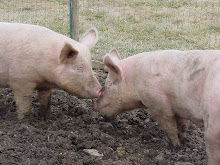
Much has changed since I made the decision to stop publishing. Of, course, I decided to give blogging another try. Before that, I graduated from ESR, moved back to my beloved state of Michigan, returned to my meeting of membership, and began studying toward an MSW. We rent a home with acreage, and have added 26 Auricana chicks, three pigs, and a bull calf to our farm. We have a home large enough to provide space for two or three more folks, maybe a small family, and hope to begin living in community as soon as we can find someone who can bear to live with me (other than my wife).
I hope to blog regularly again, though it is with some trepidation that I do. I am not a big part of a "blogging community" per se, but over the period of time that I was contributing regularly to my own space, much happened in the e-community at ESR that turned me away from further participation in the blogosphere. Primarily, I was concerned over the number of anonymous posts that were turning up, and the number of people willing to speculate, including myself, about who was doing what. The final straw, however, was when someone responded to a blog anonymously and my name was thrown into the ring. Regardless of what I have to say about anything, I would never say anything anonymously, and I believe those who know me would accept this statement as true.
There were some other minor issues, but I can address all of those as I try to reestablish an ongoing contribution to the Quaker blog community, hopefully without taking myself or others quite so seriously -but then again - I hope to continue to post about serious issues involving Quakerism and theology, social justice and the narratives of life. I also hope to involve myself in conversations with other bloggers, something that I enjoyed before but never found the time do on a regular basis. Perhaps I'll post something tonight, but in the meantime, "keep your feet on the ground, and keep reaching for the stars."
I hope to blog regularly again, though it is with some trepidation that I do. I am not a big part of a "blogging community" per se, but over the period of time that I was contributing regularly to my own space, much happened in the e-community at ESR that turned me away from further participation in the blogosphere. Primarily, I was concerned over the number of anonymous posts that were turning up, and the number of people willing to speculate, including myself, about who was doing what. The final straw, however, was when someone responded to a blog anonymously and my name was thrown into the ring. Regardless of what I have to say about anything, I would never say anything anonymously, and I believe those who know me would accept this statement as true.
There were some other minor issues, but I can address all of those as I try to reestablish an ongoing contribution to the Quaker blog community, hopefully without taking myself or others quite so seriously -but then again - I hope to continue to post about serious issues involving Quakerism and theology, social justice and the narratives of life. I also hope to involve myself in conversations with other bloggers, something that I enjoyed before but never found the time do on a regular basis. Perhaps I'll post something tonight, but in the meantime, "keep your feet on the ground, and keep reaching for the stars."
Tuesday, October 9, 2007
Are Quakers a People of Power?
A few things need to be said about politically centered non-violence, and the liberal Quaker tendency to rely upon nation-states as the primary means of achieving an end called peace. I am picking primarily upon liberal Friends because many of the more mainstream folks who attend “Quaker Churches” here in Ohioana are less concerned with a meaningful Peace Testimony than they are about keeping some members comfortable in their fond memories of “necessary wars.” Interestingly, the story I have to begin this rambling op-ed concerns a Church of the Brethren member, and not a Quaker.
I just started work at a dairy farm in the county I live in, and the owner of the farm is a devout Christian. He attends one of the local Brethren Churches that boasts a sizeable congregation. He is very involved in missions, but more importantly, he and his family are generous enough to open their homes to troubled young women who have made a few bad choices. One such woman stayed with them for several years, and many others have been helped along the path of life through the extended hand of this farmer's family.
When we were working together the other morning, I asked him about the Brethren witness to peace. He replied that his church had a broad vision of peace, but did not preach that war was always wrong, and he personally felt that war was a necessary evil. His concern was justice, especially justice for oppressed nations and peoples. I don’t believe this man is a leftist, but he does not seem like an overly politicized conservative either. I don’t know his political views or his social views, other than the ones I’ve seen him live out. His values seem to include loving his neighbor, and if possible, to be at peace with apparent enemies of justice. Yet I have to wonder, what happened in this Brethren congregation (and many of the congregations of Indiana Yearly Meeting), that overturned the idea that loving God, neighbor, and enemy were the desire of the Creator for humanity.
I just started work at a dairy farm in the county I live in, and the owner of the farm is a devout Christian. He attends one of the local Brethren Churches that boasts a sizeable congregation. He is very involved in missions, but more importantly, he and his family are generous enough to open their homes to troubled young women who have made a few bad choices. One such woman stayed with them for several years, and many others have been helped along the path of life through the extended hand of this farmer's family.
When we were working together the other morning, I asked him about the Brethren witness to peace. He replied that his church had a broad vision of peace, but did not preach that war was always wrong, and he personally felt that war was a necessary evil. His concern was justice, especially justice for oppressed nations and peoples. I don’t believe this man is a leftist, but he does not seem like an overly politicized conservative either. I don’t know his political views or his social views, other than the ones I’ve seen him live out. His values seem to include loving his neighbor, and if possible, to be at peace with apparent enemies of justice. Yet I have to wonder, what happened in this Brethren congregation (and many of the congregations of Indiana Yearly Meeting), that overturned the idea that loving God, neighbor, and enemy were the desire of the Creator for humanity.
I think the idea that political power is a good thing, and must be used in a manner that the early church (and Jesus too, I guess), couldn't conceive of. The early Church was only pacifist because they would have been stomped out if they had tried to exert political power or engage in violent revolution. The second option was certainly attractive to many throughout the empire. Yet I contend that such power, once acheived (per Constantine), is to the degredation of Jesus' ministry.
Of course, the political infrastructure of liberal democracy seems like such an attractive way to make progressive values a force in the nation, and the world. "We all have a say" in democracies, and we have opportunities to empower the disenfranchised by insisting that governments listen to their (our) voices, and then act upon their (our) demands. We all love empowering the disenfranchised, as long as they respond to our loving kindness by fully participating in the liberal project. It’s not just voting that counts, but that the new voters elect the right persons with the right values.
But what are the values we are investing ourselves in when we rely upon political process to mandate progressive responses to injustice. The values of the ballot box, and of maintaining a powerful voice for all that is right, whether liberal or conservative or middle of the road, are not only coercive in their very practice, but protected and enacted by the threat of violence. The very fact that India is a nuclear power and uses force to maintain public order and national sovereignty shows that Gandhi’s efforts poured living water upon the tree of liberty, but that tree has not borne fruit.
While Martin Luther King Jr. is fully representative of the Exodus narrative, and exuberant social commentators insist that the liberation of marginalized African-Americans has been realized, the realpolitik of empire has used the narrative in ways that have delegitimized valid outcries concerning the failure of liberal democracy to truly empower a great majority of the community. Indeed, the only real progress in race relations beyond the scope of personal relationships and a plethora of street fairs has been that African-Americans have achieved equal status as American consumers.
The point I am trying to make amidst all this harsh language, is that the mandating of social justice, peace, or equality through the ballot box (or limited boycotts that fail to address the injustice of the economy as a whole), is not only an act of coercion in itself, but is only made possible, and then protected by, the threat of, or use of, militarism or police forces. It fails to address the core necessity of loving the oppressor until reconciliation is possible. And in the meantime, communities of Quakers, and Brethren, Mennonites and others, must live out the progressive values that we are championing by inviting the marginalized, the oppressed, and the broken into communities that practice what they preach. Not only must we establish Quaker communities intent on living out the justice we want so badly for the world, but we must establish Quaker communities that reflect upon the world what justice, peace, and equality look like. How can we call for an end to racism and economic injustice when much of our denomination reflects the lifestyles of a privileged class? How can I personally call for an end to war when I am mired in a economy that thrives on coercion as a means of keeping markets open in order to feed an insatiable American consumer appetite?
If we don’t begin living lives of radical “otherness” - of radical commitment to justice and equality and peace at the expense of comfort and power, we are destined to become a people who think that violence on our own part might be necessary to limit injustice. Just like the farmer who, having the means to do good (and he certainly does good), cannot understand the audacity of enemies that fail to respect reason and continue to misbehave. Voting is a sensible thing, and peace is reasonable, until voting fails to resolve issues without violence, and peace becomes a liability to political power. I know people who are dedicated to nonviolence, who, if the right to unlimited birth control options is overturned, or limits upon various other rights find their way into our society, will believe that physical coercion looks mighty necessary. After all, no one is going to infringe on my rights.
Of course, the political infrastructure of liberal democracy seems like such an attractive way to make progressive values a force in the nation, and the world. "We all have a say" in democracies, and we have opportunities to empower the disenfranchised by insisting that governments listen to their (our) voices, and then act upon their (our) demands. We all love empowering the disenfranchised, as long as they respond to our loving kindness by fully participating in the liberal project. It’s not just voting that counts, but that the new voters elect the right persons with the right values.
But what are the values we are investing ourselves in when we rely upon political process to mandate progressive responses to injustice. The values of the ballot box, and of maintaining a powerful voice for all that is right, whether liberal or conservative or middle of the road, are not only coercive in their very practice, but protected and enacted by the threat of violence. The very fact that India is a nuclear power and uses force to maintain public order and national sovereignty shows that Gandhi’s efforts poured living water upon the tree of liberty, but that tree has not borne fruit.
While Martin Luther King Jr. is fully representative of the Exodus narrative, and exuberant social commentators insist that the liberation of marginalized African-Americans has been realized, the realpolitik of empire has used the narrative in ways that have delegitimized valid outcries concerning the failure of liberal democracy to truly empower a great majority of the community. Indeed, the only real progress in race relations beyond the scope of personal relationships and a plethora of street fairs has been that African-Americans have achieved equal status as American consumers.
The point I am trying to make amidst all this harsh language, is that the mandating of social justice, peace, or equality through the ballot box (or limited boycotts that fail to address the injustice of the economy as a whole), is not only an act of coercion in itself, but is only made possible, and then protected by, the threat of, or use of, militarism or police forces. It fails to address the core necessity of loving the oppressor until reconciliation is possible. And in the meantime, communities of Quakers, and Brethren, Mennonites and others, must live out the progressive values that we are championing by inviting the marginalized, the oppressed, and the broken into communities that practice what they preach. Not only must we establish Quaker communities intent on living out the justice we want so badly for the world, but we must establish Quaker communities that reflect upon the world what justice, peace, and equality look like. How can we call for an end to racism and economic injustice when much of our denomination reflects the lifestyles of a privileged class? How can I personally call for an end to war when I am mired in a economy that thrives on coercion as a means of keeping markets open in order to feed an insatiable American consumer appetite?
If we don’t begin living lives of radical “otherness” - of radical commitment to justice and equality and peace at the expense of comfort and power, we are destined to become a people who think that violence on our own part might be necessary to limit injustice. Just like the farmer who, having the means to do good (and he certainly does good), cannot understand the audacity of enemies that fail to respect reason and continue to misbehave. Voting is a sensible thing, and peace is reasonable, until voting fails to resolve issues without violence, and peace becomes a liability to political power. I know people who are dedicated to nonviolence, who, if the right to unlimited birth control options is overturned, or limits upon various other rights find their way into our society, will believe that physical coercion looks mighty necessary. After all, no one is going to infringe on my rights.
I see violence in our future as Quakers. I see violence because if all of our peace and justice eggs are in the political basket, we are doomed to assuming the oppressor's terms as our own in our desire to maintain power over our own political futures, and the futures of others. We will have forgotten what it means to be a people of peace, because we have politically evolved into a people of power. Film at 11.
Tuesday, September 18, 2007
The Politics of Faith
Faith might be one of the more difficult things to explain to others, but it might be even more difficult to identify it in others. So many of us (and them!) seem to define faith in a manner that insists upon political manifestations of our theology. How many people voted for the current president because they felt that he was representative of “Christian” values, hoping that the faith of George Bush might somehow prompt some god to erase the evils of liberalism. Political power, while possibly a more abstract idea for some, seems to be the primary task of much of Christendom in the United States, as if though YHWH might only be made real through the ballot boxes of liberal democracy.
This is not just a problem of Republicans on their knees, however. There is much of the same behavior evident among the more left-leaning church-goers, spiritualists, and of course, Quakers. I still recall the time I ran across bumper stickers for John Kerry on the table at Meeting, and the time that some Friends engaged in vote-trading with Nader supporters in other states.
It is troubling that faith in God, or a persons’ theology, is often most visible during an election cycle. Gratefully, not many Quakers seem to suggest that their vote reflects the will of God as some other voters or politicians have done. But just the same, many of us seem to have a faith that is more informed by our personal socio-political desires than by a community of faith that reflects a revelatory experience of the divine nature.
Quite often, Friends are defending the Peace Testimony as a political construct, instead of a corporate experience of God. Of course, it might be argue that the Peace Testimony originated as a political construct - or a political necessity – and that may be true. But the foundation of the Quaker Peace Testimony is the tradition of the Believers’ Church that takes seriously the example of Jesus. It is, inherently, a statement of faith in the example of Jesus as the proper reflection of YHWH’s desire for human relationships. Without Jesus as the central aspect of our witness, the language of the Peace Testimony loses its intelligibility.
Yet, when we strive for the political implementation of our witness to peace as the primary manifestation of our faith, or the most appropriate means to an end, not only does it relieve us of the responsibility to sacrifice on behalf of our belief, it relaxes the importance of a community of faith committed solely to providing an example of faith, so that others may know what peace looks like. How dare I attempt to legislate an ethic that I cannot fully engage in as an act of faith. How dare I engage in legislating what is inherently a voluntary act of sacrifice for an individual or community.
I would like to vote for the redistribution of wealth, but I fail to properly share my own. I would like to vote for an end to war, but I so enjoy my privileged consumer status as an American. I cannot in good conscious vote my faith, because I am in no position to ask others to follow a path that I cannot navigate.
Yet, I also have certain beliefs that I try not to compromise (though I often fail). One being that, in the example of Jesus, dominance and power are located furthest from the edges of the realm of God. If Jesus is reflective of God’s desire, then loving one’s enemies and praying for those who might persecute us takes priority over the dehumanizing of political opponents as being less than God’s beloved. It takes a lot of faith to believe that God will work for peace and justice over and against the machinations of human politics. It takes even more faith to live them out alone amongst an unfaithful world. As for voting, well, it simply lends credibility to a system that thrives on domination and power.
This is not just a problem of Republicans on their knees, however. There is much of the same behavior evident among the more left-leaning church-goers, spiritualists, and of course, Quakers. I still recall the time I ran across bumper stickers for John Kerry on the table at Meeting, and the time that some Friends engaged in vote-trading with Nader supporters in other states.
It is troubling that faith in God, or a persons’ theology, is often most visible during an election cycle. Gratefully, not many Quakers seem to suggest that their vote reflects the will of God as some other voters or politicians have done. But just the same, many of us seem to have a faith that is more informed by our personal socio-political desires than by a community of faith that reflects a revelatory experience of the divine nature.
Quite often, Friends are defending the Peace Testimony as a political construct, instead of a corporate experience of God. Of course, it might be argue that the Peace Testimony originated as a political construct - or a political necessity – and that may be true. But the foundation of the Quaker Peace Testimony is the tradition of the Believers’ Church that takes seriously the example of Jesus. It is, inherently, a statement of faith in the example of Jesus as the proper reflection of YHWH’s desire for human relationships. Without Jesus as the central aspect of our witness, the language of the Peace Testimony loses its intelligibility.
Yet, when we strive for the political implementation of our witness to peace as the primary manifestation of our faith, or the most appropriate means to an end, not only does it relieve us of the responsibility to sacrifice on behalf of our belief, it relaxes the importance of a community of faith committed solely to providing an example of faith, so that others may know what peace looks like. How dare I attempt to legislate an ethic that I cannot fully engage in as an act of faith. How dare I engage in legislating what is inherently a voluntary act of sacrifice for an individual or community.
I would like to vote for the redistribution of wealth, but I fail to properly share my own. I would like to vote for an end to war, but I so enjoy my privileged consumer status as an American. I cannot in good conscious vote my faith, because I am in no position to ask others to follow a path that I cannot navigate.
Yet, I also have certain beliefs that I try not to compromise (though I often fail). One being that, in the example of Jesus, dominance and power are located furthest from the edges of the realm of God. If Jesus is reflective of God’s desire, then loving one’s enemies and praying for those who might persecute us takes priority over the dehumanizing of political opponents as being less than God’s beloved. It takes a lot of faith to believe that God will work for peace and justice over and against the machinations of human politics. It takes even more faith to live them out alone amongst an unfaithful world. As for voting, well, it simply lends credibility to a system that thrives on domination and power.
Wednesday, September 5, 2007
Quaker distinctives
Once upon a time, Quakers were a people who were easily identified by those who were not Quakers. This fact predates the era of Church prescribed clothing and the hat brim police (Mine is three and three quarters inches). Early Friends were identifiable by their insistence the leveling of unequal relationships, such as the eliminating of status markers like bowing and scraping, or the use of "you" in place of "thee" or "thou" when speaking with individuals of greater (or lesser) social status. Quakers were kicked out of the New Model Army for refusing to abide by military hierarchy and protocol, and did not insist upon receiving reverential treatment from servants or other common folk. They refused to address political or religious authorities by using commonly accepted titles. Early Friends never called anyone sir.
Other distinctives, such as the eschewing of elaborate clothing, jewelry, and furniture in favor of plainness was an early marker of Friends' faith. there is one episode of mass convincement remembered where hundreds of new Quakers burned their ribbons and other finery on the spot. There are a few other distinctives that were particular to Quakerism.
One that I have identified is that early Friends were very public in their faith. Not only did Friends insist on worshipping publicly despite persecutions and laws directed specifically against such meetings, but they insisted on publishing Truth, and using metaphor for spreading the gospel. Going naked as a sign, interrupting church services, and walking through towns and calling them to repentance were all meant as signs that the kingdom of God was being realized, and the Friends were ushering it in. Friends were constantly gathering petitions and speaking before authorities in their attempts to change public policy on everything from prison conditions and tithing laws to freedom of conscience and religious tolerance issues.
Another particular of early Quakerism is voluntary sacrifice, which is most often coupled with an insistence upon public witness. Quakers insisted on public displays of faith, and as such, suffered imprisonment, loss of property, and public beatings for refusing to be silenced (no pun intended) concerning the Word of God. Many Friends were people of economic means, and they sacrificed when they gave up certain luxuries or finery in pursuit of faithful simplicity. Quaker business people often suffered for using set prices and refusing to sell worldly goods (such as ribbons and jewelry!).
Of course, Social justice was an inherent aspect of the Quaker refusal to pay tithes, or to recognize an established Church, or to engage in socially abhorrent markers of class distinction. Friends commitment to equality in the ministry and between marriage partners was significant for women in the 17th century, and did not happen without inner struggle on the part of many. Still, Social justice, and especially care for the poor, was a particularity of early Quakerism that significantly impacted the rest of society.
Finally, as William Penn (among others) commented, the Friends were a distinctive people due to their commitment to love their neighbors and their enemies, and to pray for those who persecuted them. After 1660, nearly all Friends were commit ed to a pacifist expression of their faith, and the commitment to non-violence became the most identifiable aspect of Quakerism. I certainly believe that Quakers are still primarily a people of peace, despite some among us who question such a commitment.
What are our Quaker distinctives today. How do folks know that we are, a people of peace, and a people of justice. Are we a sect who continues to voluntarily sacrifice in order to see justice done, or have we settled into the mainstream methods of comfortably critiquing injustice while avoiding the suffering that often comes along with moral striving. Are we public, as the Religious Society of Friends, in our witness to peace and justice in a manner that stakes a claim in the truth of a God that desires peace and justice for creation.
I think that individual Quakers are meeting all of these suggested criteria in a variety of ways. The question that remains is, are we doing so as a people dedicated to such in a manner that identifies us as primarily committed to such distinctives as a corporate expression of faith. Are we Quakers committed to peace making in the manner of Friends,, or are we individual participants in a liberal democracy that is primarily committed to wholly other ends, and most certainly, wholly other means. I would hope that our faith is not rested in the individual's expression of justice, and I exhort all not to place their faith in the nation state. I pray that we will once again be a distinctive people committed to God and living lives of faithfulness, despite the rejection that may bring from mainstream religion, enlightenment idealists, or social scientists who have rejected corporate faith as a means of offering the world an alternative to the brokenness of the world.
Other distinctives, such as the eschewing of elaborate clothing, jewelry, and furniture in favor of plainness was an early marker of Friends' faith. there is one episode of mass convincement remembered where hundreds of new Quakers burned their ribbons and other finery on the spot. There are a few other distinctives that were particular to Quakerism.
One that I have identified is that early Friends were very public in their faith. Not only did Friends insist on worshipping publicly despite persecutions and laws directed specifically against such meetings, but they insisted on publishing Truth, and using metaphor for spreading the gospel. Going naked as a sign, interrupting church services, and walking through towns and calling them to repentance were all meant as signs that the kingdom of God was being realized, and the Friends were ushering it in. Friends were constantly gathering petitions and speaking before authorities in their attempts to change public policy on everything from prison conditions and tithing laws to freedom of conscience and religious tolerance issues.
Another particular of early Quakerism is voluntary sacrifice, which is most often coupled with an insistence upon public witness. Quakers insisted on public displays of faith, and as such, suffered imprisonment, loss of property, and public beatings for refusing to be silenced (no pun intended) concerning the Word of God. Many Friends were people of economic means, and they sacrificed when they gave up certain luxuries or finery in pursuit of faithful simplicity. Quaker business people often suffered for using set prices and refusing to sell worldly goods (such as ribbons and jewelry!).
Of course, Social justice was an inherent aspect of the Quaker refusal to pay tithes, or to recognize an established Church, or to engage in socially abhorrent markers of class distinction. Friends commitment to equality in the ministry and between marriage partners was significant for women in the 17th century, and did not happen without inner struggle on the part of many. Still, Social justice, and especially care for the poor, was a particularity of early Quakerism that significantly impacted the rest of society.
Finally, as William Penn (among others) commented, the Friends were a distinctive people due to their commitment to love their neighbors and their enemies, and to pray for those who persecuted them. After 1660, nearly all Friends were commit ed to a pacifist expression of their faith, and the commitment to non-violence became the most identifiable aspect of Quakerism. I certainly believe that Quakers are still primarily a people of peace, despite some among us who question such a commitment.
What are our Quaker distinctives today. How do folks know that we are, a people of peace, and a people of justice. Are we a sect who continues to voluntarily sacrifice in order to see justice done, or have we settled into the mainstream methods of comfortably critiquing injustice while avoiding the suffering that often comes along with moral striving. Are we public, as the Religious Society of Friends, in our witness to peace and justice in a manner that stakes a claim in the truth of a God that desires peace and justice for creation.
I think that individual Quakers are meeting all of these suggested criteria in a variety of ways. The question that remains is, are we doing so as a people dedicated to such in a manner that identifies us as primarily committed to such distinctives as a corporate expression of faith. Are we Quakers committed to peace making in the manner of Friends,, or are we individual participants in a liberal democracy that is primarily committed to wholly other ends, and most certainly, wholly other means. I would hope that our faith is not rested in the individual's expression of justice, and I exhort all not to place their faith in the nation state. I pray that we will once again be a distinctive people committed to God and living lives of faithfulness, despite the rejection that may bring from mainstream religion, enlightenment idealists, or social scientists who have rejected corporate faith as a means of offering the world an alternative to the brokenness of the world.
Saturday, September 1, 2007
Sorry, This is sort of a Rant
Lots of people are hooked on the idea of Truth these days. For instance, some might say the Bible is true, every word of it, and others might suggest that it does not meet the criteria reserved for judging the veracity of fact claims. Others might say that it is certainly true that human beings or nation states have a right to defend themselves from violent attacks on personal or national sovereignty. I believe that, amongst Quakers, there is a consistently held view that universal human rights not only exist, but that human beings are obligated to struggle – politically or militarily – to preserve the universal application of such rights. The question that I have for all of you who demand that universal human rights are – well – rights, is…who says.
How can anyone empirically prove that rights do in fact exist, or, that there are “universal rights” that should receive protected status? Where do human rights come from, if they do exist? Are they a universal expression of what is best for humanity to thrive, or are human rights simply a projection of a collective western fantasy that all people are born equal.
It is my experience human beings are born no more equal to one another than they were in the eighteenth century when a few white guys suggested that we were. Of course, women and slaves were not born into equality, and while the western world has spoken out against slavery and sexism over the past hundred and fifty years or so, the assumed equality enjoyed by every human is still not universal.
I suggest that if westerners really believed that humans had basic rights, they might extend beyond universal suffrage, free speech, and prohibitions against discriminating against one’s involuntary particulars such as race.
It seems to me that if Nicaraguans or Haitians, Afghanis and Palestinians were born equal, they would have immediate access to western health care, control of their own capital resources, and freedom from foreign intervention concerning economic decisions. I’ll hazard to guess that most Quakers will agree with these premises, and even say that they stress such values in their daily lives. This brings me to two points.
First, values are not rights. Values are, at least in the western world, individual preferences concerning one’s personal ethic. Values in the 21st century are fairly subjective, if not arbitrary. I might even suggest that most peoples’ values are more informed by their quest for political power than any sense of good or bad. So, just as one might question the validity of values based upon religious faith as subjective values centered upon beliefs and not Truth, I suggest that “rights” are simply the secular expression of certain values with the implication that they are somehow “objective.”
Secondly, I want to suggest that our Quaker perception of “rights” actually interferes with our ability to agree upon values that more properly reflect a just society, or a society that focuses on social justice as the ultimate expression of humanity, and not universal rights.
How do Quakers feel about the rights of certain historically marginalized peoples to hold combat roles in the military? Should women and homosexuals have the right to fight for the empire? How do Quakers feel about free speech when the rich dominate political speech, and the marginalized cannot afford to enjoy it? How do Quakers feel when a personal right to acquire unlimited resources and wealth conflicts with the right of marginalized peoples to control their own economic destiny? None of us generally discuss the possibility that the personal rights we enjoy might conflict with the human rights we suggest exist, possibly so that we can formally claim our own right to enjoy the benefits of exploitation without taking responsibility.
Many of us will say that we believe in a God who directs us toward lifestyles that benefit humanity, that strives for social justice, and most importantly, that does so in a nonviolent way that reflects the love our Creator has for creation. Of course, then we are admitting that God has a will for humanity, a purpose that we can discern and live out the best we are able. If the striving for justice is to be anything other than just another values claim to be thrown upon the Enlightenment’s trash heap of assertions that failed to meet the criteria of empiricism, Quakers might consider a corporate expression of who God is, and what that God’s will might entail. Or is a God of justice and peace a God who has been put in a box?
How can anyone empirically prove that rights do in fact exist, or, that there are “universal rights” that should receive protected status? Where do human rights come from, if they do exist? Are they a universal expression of what is best for humanity to thrive, or are human rights simply a projection of a collective western fantasy that all people are born equal.
It is my experience human beings are born no more equal to one another than they were in the eighteenth century when a few white guys suggested that we were. Of course, women and slaves were not born into equality, and while the western world has spoken out against slavery and sexism over the past hundred and fifty years or so, the assumed equality enjoyed by every human is still not universal.
I suggest that if westerners really believed that humans had basic rights, they might extend beyond universal suffrage, free speech, and prohibitions against discriminating against one’s involuntary particulars such as race.
It seems to me that if Nicaraguans or Haitians, Afghanis and Palestinians were born equal, they would have immediate access to western health care, control of their own capital resources, and freedom from foreign intervention concerning economic decisions. I’ll hazard to guess that most Quakers will agree with these premises, and even say that they stress such values in their daily lives. This brings me to two points.
First, values are not rights. Values are, at least in the western world, individual preferences concerning one’s personal ethic. Values in the 21st century are fairly subjective, if not arbitrary. I might even suggest that most peoples’ values are more informed by their quest for political power than any sense of good or bad. So, just as one might question the validity of values based upon religious faith as subjective values centered upon beliefs and not Truth, I suggest that “rights” are simply the secular expression of certain values with the implication that they are somehow “objective.”
Secondly, I want to suggest that our Quaker perception of “rights” actually interferes with our ability to agree upon values that more properly reflect a just society, or a society that focuses on social justice as the ultimate expression of humanity, and not universal rights.
How do Quakers feel about the rights of certain historically marginalized peoples to hold combat roles in the military? Should women and homosexuals have the right to fight for the empire? How do Quakers feel about free speech when the rich dominate political speech, and the marginalized cannot afford to enjoy it? How do Quakers feel when a personal right to acquire unlimited resources and wealth conflicts with the right of marginalized peoples to control their own economic destiny? None of us generally discuss the possibility that the personal rights we enjoy might conflict with the human rights we suggest exist, possibly so that we can formally claim our own right to enjoy the benefits of exploitation without taking responsibility.
Many of us will say that we believe in a God who directs us toward lifestyles that benefit humanity, that strives for social justice, and most importantly, that does so in a nonviolent way that reflects the love our Creator has for creation. Of course, then we are admitting that God has a will for humanity, a purpose that we can discern and live out the best we are able. If the striving for justice is to be anything other than just another values claim to be thrown upon the Enlightenment’s trash heap of assertions that failed to meet the criteria of empiricism, Quakers might consider a corporate expression of who God is, and what that God’s will might entail. Or is a God of justice and peace a God who has been put in a box?
Friday, August 31, 2007
Rantings about Baptism
As I sat around at ESR the other day the topic of discussion was baptism. Water baptism. The question was raised, actually it was repeated second hand, that one of our seminarians (FGC no less) might have wondered why we don't have water baptisms, especially if someone might think it would be a nice thing to do? I wonder if this is from the same person that defends the recognition of non-theists as Friends. Wouldn't that be interesting. Maybe I could get soaked with a power washer by a non-theist Quaker.
But seriously, my concern isn't with yet another dive into the depths of water baptism, but with the total lack of discussion about real Quaker baptism, the Baptism of Fire by the Holy Spirit. How many Friends have you recently heard speak of their experience of the Holy Spirit in terms of baptism? How many Friends talk openly about the moment when they suddenly knew, not only that God loved them, but that God had plans for them? How many of us talk about that time when our lives began to change so significantly that others could experience our radical turn toward the risky business of serving God? Have Quakers so lost the language, and possibly even the experience, of the Baptism of the Spirit as a central tenet of our sacramental theology?
And let's not forget that Spirit baptisms are not a once-off event. Convincement can happen at any time, for who can limit God's yearning to teach and guide and water the seed over and over again. Our nurturing Creator knows us as a people thirsty for the Spirit, and we are blessed with multiple opportunities for such an experience as we venture through life. The Baptism of Fire and the concept of convincement are one and the same. Baptism opens our eyes and convicts our soul, and convincement generates never ending opportunities to see ourselves in relationship to God and one another with sudden clarity of purpose...of Truth.
As for water baptism, my take on such an event is that it is a marker of membership for those adults who wish to join a church community. (Let's not even discuss infant sprinkling!) Yet, the Apostle Paul warns against any works or badges of membership, insisting that we are God's people as a matter of faith. We are not allowed into a club once we have been dunked. We are members of the Body of Christ because we believe in the faith of Jesus Christ. While Friends might not see water baptism as a deterrent to true faith any more, it certainly is an unnecessary, and possible spiritually misguided, attempt at forcing a faith instead of waiting upon the Spirit to act in magnificent ways.
But more importantly, someone who participates in a water baptism outside of a community of faith that truly experiences such an event as a sacred event, makes a mockery of someone else's faith. I hope that no Quakers are getting baptized in water because it seems like a neat thing to do. And I also hope that we continue to support our neighbors who worship in such communities when they invite us to witness their baptisms, and share how we Quakers understand such an event. Ecumenism shares faith, it should not co opt it.
But seriously, my concern isn't with yet another dive into the depths of water baptism, but with the total lack of discussion about real Quaker baptism, the Baptism of Fire by the Holy Spirit. How many Friends have you recently heard speak of their experience of the Holy Spirit in terms of baptism? How many Friends talk openly about the moment when they suddenly knew, not only that God loved them, but that God had plans for them? How many of us talk about that time when our lives began to change so significantly that others could experience our radical turn toward the risky business of serving God? Have Quakers so lost the language, and possibly even the experience, of the Baptism of the Spirit as a central tenet of our sacramental theology?
And let's not forget that Spirit baptisms are not a once-off event. Convincement can happen at any time, for who can limit God's yearning to teach and guide and water the seed over and over again. Our nurturing Creator knows us as a people thirsty for the Spirit, and we are blessed with multiple opportunities for such an experience as we venture through life. The Baptism of Fire and the concept of convincement are one and the same. Baptism opens our eyes and convicts our soul, and convincement generates never ending opportunities to see ourselves in relationship to God and one another with sudden clarity of purpose...of Truth.
As for water baptism, my take on such an event is that it is a marker of membership for those adults who wish to join a church community. (Let's not even discuss infant sprinkling!) Yet, the Apostle Paul warns against any works or badges of membership, insisting that we are God's people as a matter of faith. We are not allowed into a club once we have been dunked. We are members of the Body of Christ because we believe in the faith of Jesus Christ. While Friends might not see water baptism as a deterrent to true faith any more, it certainly is an unnecessary, and possible spiritually misguided, attempt at forcing a faith instead of waiting upon the Spirit to act in magnificent ways.
But more importantly, someone who participates in a water baptism outside of a community of faith that truly experiences such an event as a sacred event, makes a mockery of someone else's faith. I hope that no Quakers are getting baptized in water because it seems like a neat thing to do. And I also hope that we continue to support our neighbors who worship in such communities when they invite us to witness their baptisms, and share how we Quakers understand such an event. Ecumenism shares faith, it should not co opt it.
Subscribe to:
Posts (Atom)